

 |  |

- "I will not let this Republic that has stood for a thousand years be split in two!"
- ―Supreme Chancellor Palpatine
The Separatist Crisis (24–22 BBY), also called the Secessionist Movement, was a period of political turmoil at the end of the Great Peace in which thousands of star systems seceded from the Galactic Republic and pledged loyalty to Count Dooku and the Confederacy of Independent Systems. The period took place in the years following the Invasion of Naboo, and was manipulated by Dooku and his Sith master, the Sith Lord Darth Sidious—publicly known as Supreme Chancellor Palpatine of the Republic. The goal of the Sith was to launch a galactic war that would allow them to amass total control over the Republic, transform it into the Galactic Empire, and destroy the Jedi Order. To help with that goal, the Sith secretly oversaw the creation of an army of clone troopers on the planet Kamino that would become an army for the Republic.
The political turmoil bred by the Separatist Crisis rocked the Republic, with Chancellor Palpatine publicly claiming that he hoped to find a diplomatic solution and avoid a war with the Separatist Alliance. Many in the Confederacy, including members of the Separatist Senate, also did not wish to fight, as they simply wanted to be free of what they saw as the corruption of the Republic. After the attempted assassination of Padmé Amidala, the senator of Naboo and an influential member of the Republic's Loyalist Committee, the Jedi Knight Obi-Wan Kenobi began an investigation that led him to discover the clone army on Kamino, as well as a gathering of powerful business interests on Geonosis. These business leaders, who would become known as the Executive Separatist Council, committed their resources to Count Dooku's cause. These interests included the Trade Federation, which committed to producing countless battle droids for the Separatists.
The Crisis culminated in the First Battle of Geonosis, when members of the Jedi Order arrived on Geonosis to rescue the captive Master Kenobi, Senator Amidala, and Padawan Anakin Skywalker from execution. The clone troopers, commissioned as the Grand Army of the Republic through emergency executive power granted to the chancellor by the Galactic Senate, arrived under the command of Jedi Grand Master Yoda and fought the Separatist Droid Army. Although the Republic was victorious in battle, it was merely the first conflict of the three-year Clone Wars. At its end, the goals of the Sith were realized; the Republic defeated the Confederacy, but the Chancellor used the war as a pretense to reform the Republic into the Galactic Empire in the name of security. Though the Empire was ultimately defeated by a New Republic nearly twenty-five years later, the legacy of the Separatist Crisis lived on for decades after, with the First Order rising from the ashes of the Empire in a further attempt to bring the kind of stability to the galaxy that the Galactic Republic was unable to bring during the Separatist Crisis.
Prelude[]
The Republic's stagnation[]
- "The Republic is not what it once was. The Senate is full of greedy, squabbling delegates. There is no interest in the common good."
- ―Sheev Palpatine
For centuries, the prospect of trade with lucrative Core World markets inexorably pulled nonmember worlds into closer cooperation with the Galactic Republic.[8] Although the Republic embarked on a vast colonization of the Outer Rim Territories through its massive outreach program during the High Republic Era,[9] Core Worlds came to fear that new worlds from the distant periphery would appropriate their own wealth. As such, wealthy senators moved to protect themselves against these "provincial territories" far from the civilized and cosmopolitan Core. As a result, planets were often left waiting—some for centuries—to be admitted into the body politic, while those that were admitted found themselves largely ignored in the chaotic Senate chamber. Local power blocs soon emerged among neighboring star systems in the galaxy's periphery, demanding greater representation and rights.[8]
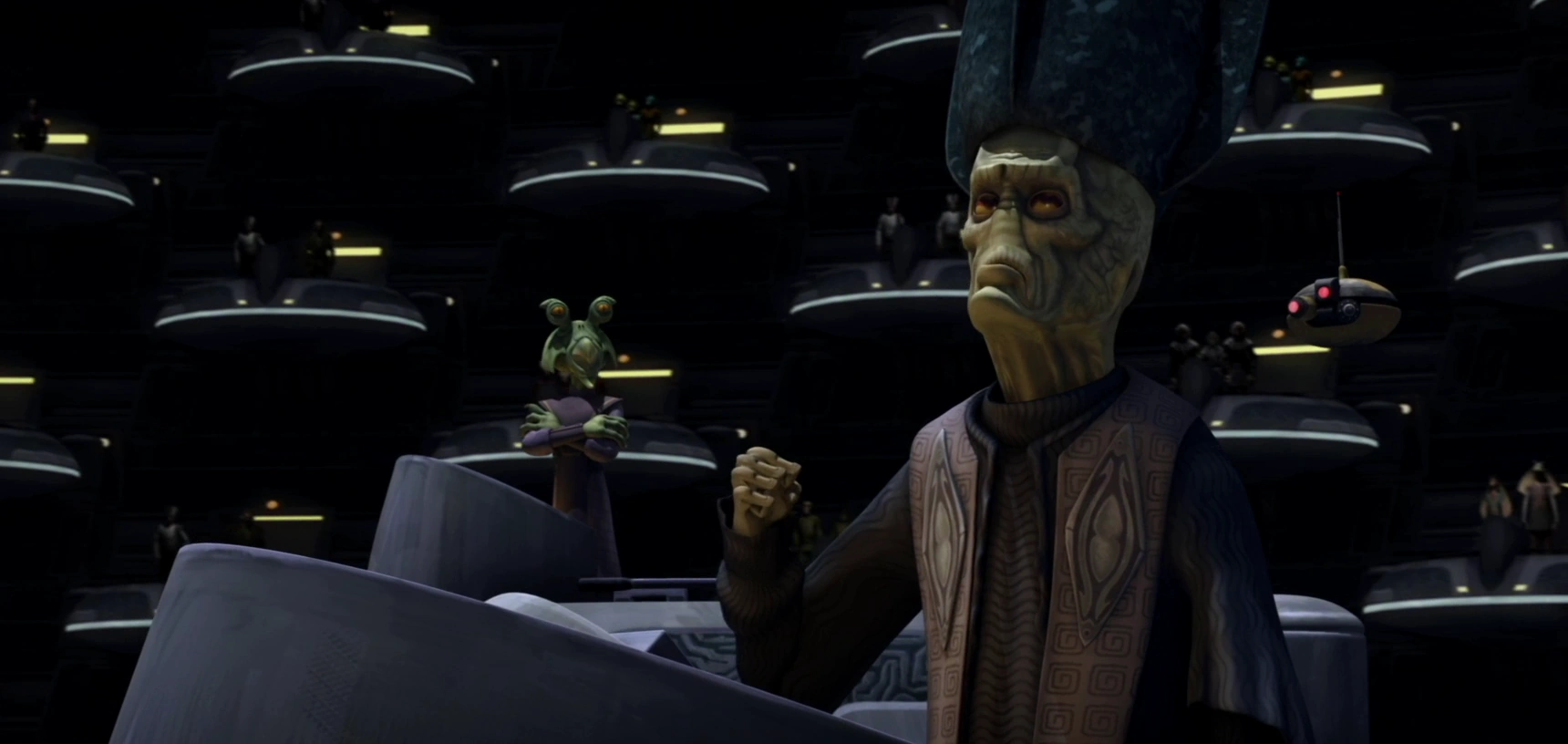
The later years of the Galactic Republic were marked by corruption in its Senate, which was further hurt by corporate interests receiving representation amongst the governing body.
Over time, many senators began prioritizing their own interests above the common good,[7] slowly eroding the foundations of democracy that initially built the Republic.[6] Legislation grinded to a halt as the Senate became mired in bureaucratic procedure that fostered inaction and rampant corruption.[10] With the Republic seemingly unwilling to fight against the crime syndicates that dominated the Outer Rim and even parts of the Republic's own territory, the people of the Outer Rim began to believe the Republic had abandoned them to the richer Core Worlds, which held far more influence within the government.[3] Indeed, planets like Vallt found themselves lacking in trade, respect, and fair representation despite their Republic membership.[11] Meanwhile, monolithic corporations such as the Trade Federation were granted representation in the Galactic Senate[12] despite blatantly exploiting loopholes for greater profits. Representation granted these corporate groups the ability to lobby for their interests,[13] which often ran counter to those of galactic citizens, and further weakened the Senate. The Republic had once taken a stand against immoral corporations by shutting down the Expansionist Oligarchy, only for those same companies to continue operating through the creation of the Corporate Sector.[3]
Whilst the Expansionist Oligarchy existed hundreds of years before the Separatist Crisis broke out, its existence marked the start of the divisions that one day led to the crisis.[3] Meanwhile, worlds that existed outside of Republic borders were left to fend for themselves, with outlawed practices like slavery finding a home on Outer Rim planets like Tatooine.[7] Although the High Republic[9] and the Jedi made efforts to aid the entire Galactic Frontier,[14] the Jedi Order of the late Republic Era failed to address crises in the Outer Rim due to them existing outside of the Republic's borders.[7] Even within the Republic's own borders,[3] Supreme Chancellor Lina Soh's High Republic ideals about helping all member worlds, no matter their location in space—under the motto "We are all the Republic"[9]—had long since faded away.[15] The Jedi were also largely distrusted by the people of the Outer Rim, as their alliance with the Republic led to them work for the government as troubleshooters and diplomats. By the time of the Clone Wars, the Jedi came to serve the Republic as warriors and commanders[3] despite their traditional role as peacekeepers[1] with impartial judgement.[3]
The people of the Core Worlds, meanwhile, greatly trusted the Jedi due to how closely they worked with the Republic.[3] With many outlying worlds lacking the protection of the Republic Judicial Forces, who were often withheld from aiding the Outer Rim after refusing to provide the Core with profitable deals, the Outer Rim world of Eriadu formed the Outland Regions Security Force to protect the Seswenna sector and soon saw stunning success when a young cadet, Wilhuff Tarkin, ascended into its forces.[5] Despite this, little impact was made on galactic society as a whole within the next few years. When the Trade Federation, under Viceroy Nute Gunray himself, blockaded the serene planet of Naboo over disputes about plasma exports, then Supreme Chancellor Finis Valorum was replaced by Senator Sheev Palpatine through a Vote of No Confidence requested by Naboo Queen Padmé Amidala. Unbeknownst to all but a select few, Palpatine was secretly the Dark Lord of the Sith Darth Sidious, who portrayed himself as a mild-mannered servant of the common good to[7] fulfill the Sith Grand Plan, which would see the galaxy placed under Sith control and destroy the Jedi Order.[16] He had manipulated the entire crisis from the start to be elected Supreme Chancellor.[7]
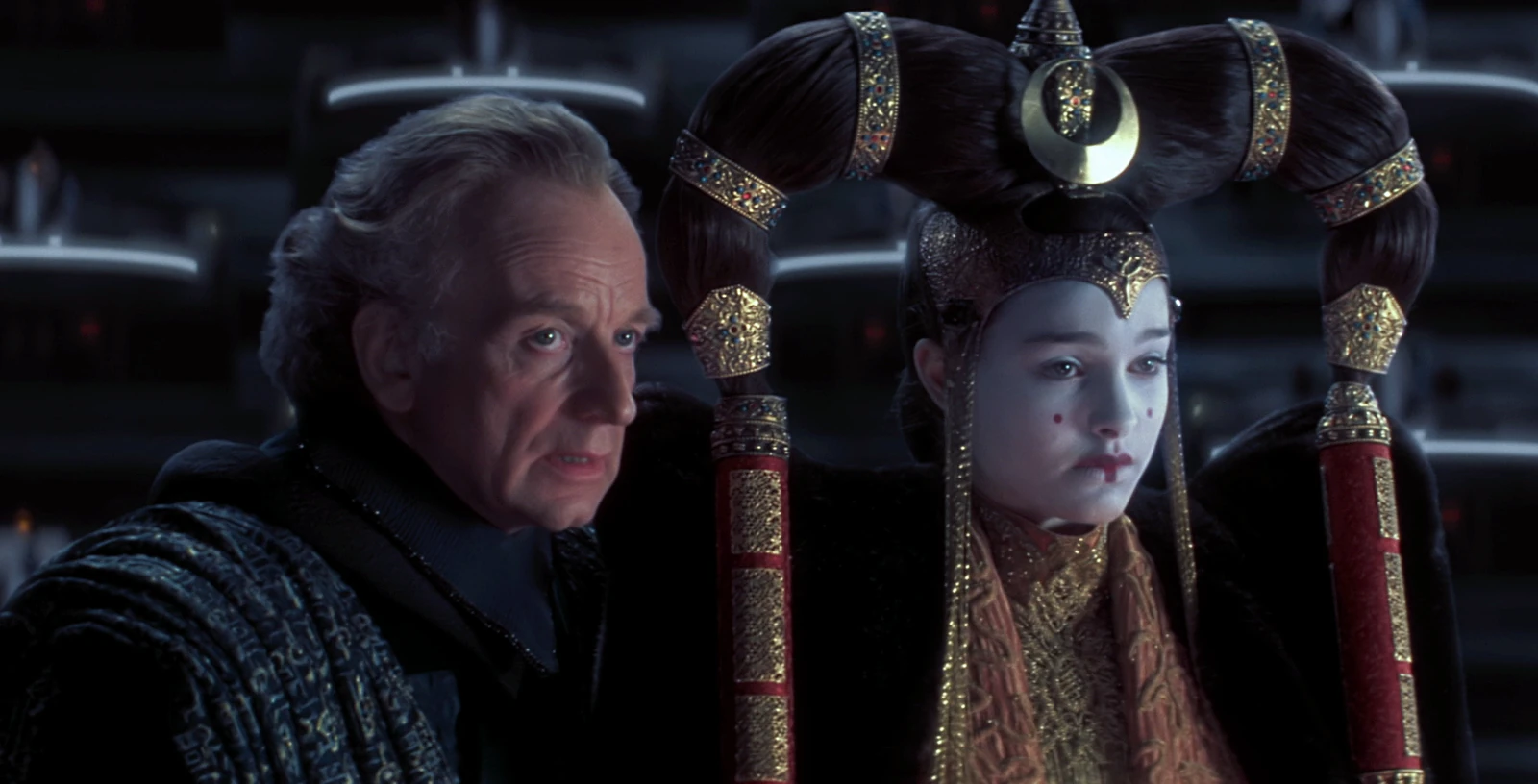
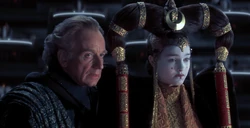
It was Darth Sidious who manipulated galactic affairs from the shadows and, working under the cover of the well-meaning politician Sheev Palpatine, in the Senate itself.
Instead of waiting for the Republic to take action, the Naboo and Gungans ultimately liberated themselves from the Federation's control in the Battle of Naboo.[7] Afterward, it seemed as though the Naboo Crisis would be nothing more than a catalyst for senatorial debates. Instead, however, it showcased the Republic's great weaknesses through its massive bureaucracy, weak central powerbase, and lack of a military force, and brought Palpatine to the front as a political reformist. Although Palpatine was able to vilify corporate powers[17] and initially made moves to weaken the Federation as chancellor,[18] the ineffective Senate let the Trade Federation continue its operations,[15] ensuring it remained a powerful force in the Senate.[13] The galaxy at large returned to the political squabbles that would form the basis of the Separatists Crisis,[15] with concerns about the Republic's effectiveness beginning to arise in some corners of the Senate itself.[13] Palpatine's work at berating conglomerates also helped lead to the Separatist Crisis.[17]
With Sidious's Sith apprentice Darth Maul having emerged and seemingly died during the Naboo Crisis, the Jedi were made aware of the return of the Sith, yet they remained unaware of Palpatine's true identity.[7] Safe in his role as chancellor, Palpatine was free to move the galaxy towards what would become the Clone Wars,[17] which would be fought between the Republic and the Confederacy of Independent Systems, the alliance that the Separatist Crisis would give way to.[1]
Rise of Dooku[]
- "I have come to discuss a business arrangement with your organization. Or what remains of it."
"Who… who are…"
"I am but an agent of your new master. I trust that you understand me." - ―Dooku and a member of the Kaldana Syndicate
In the years before the Naboo Crisis,[20] a Jedi Master by the name of Dooku had left the Order, having come to disagree with the direction the Jedi and Republic were heading in. Instead, having decided his homeworld of Serenno needed him after his brother's machinations brought strife to the planet, Dooku took up his family title of Count of Serenno[21] and mostly retreated from public life,[5] seemingly only using his role to lead Serenno[21] and look after House Serenno's business interests.[19] During his time away from the Order, however, Dooku came to attention of Sidious,[1] who actually had met Dooku before he left the Order following a Senate session.[21] Although some began to assume Dooku was working on creating his own version of the Jedi Order,[5] he established a reputation as being a political idealist[1] and led the Independent Movement for Self-Determination,[22] which toured universities and found support amongst young intellectuals,[6] giving himself the reputation he would need for the Separatist Crisis.[22] Sidious secretly brought Dooku into his fold and growing plans.[1]
Although the Sith traditions laid down by Darth Bane maintained that there could only be two Sith at one time, a Sith Master and apprentice, through the Rule of Two,[3] Sidious recruited Dooku to the side of the Sith while he was still training Maul[23] by exploiting the man's discontentment towards the Republic.[3] Following his new master's wishes, Dooku exploited the actions of[24] his former friend,[21] Jedi Master Sifo-Dyas, who had foreseen a coming war that would force the Republic to raise an army. With Dooku's help[25] and on behalf of the Republic, Dyas ordered an army of clone troopers from the planet Kamino,[1] only for Dooku to arrange for Dyas's murder at the hands of the Pyke Syndicate and make it seem like the Jedi Master had died on the planet Felucia.[24]
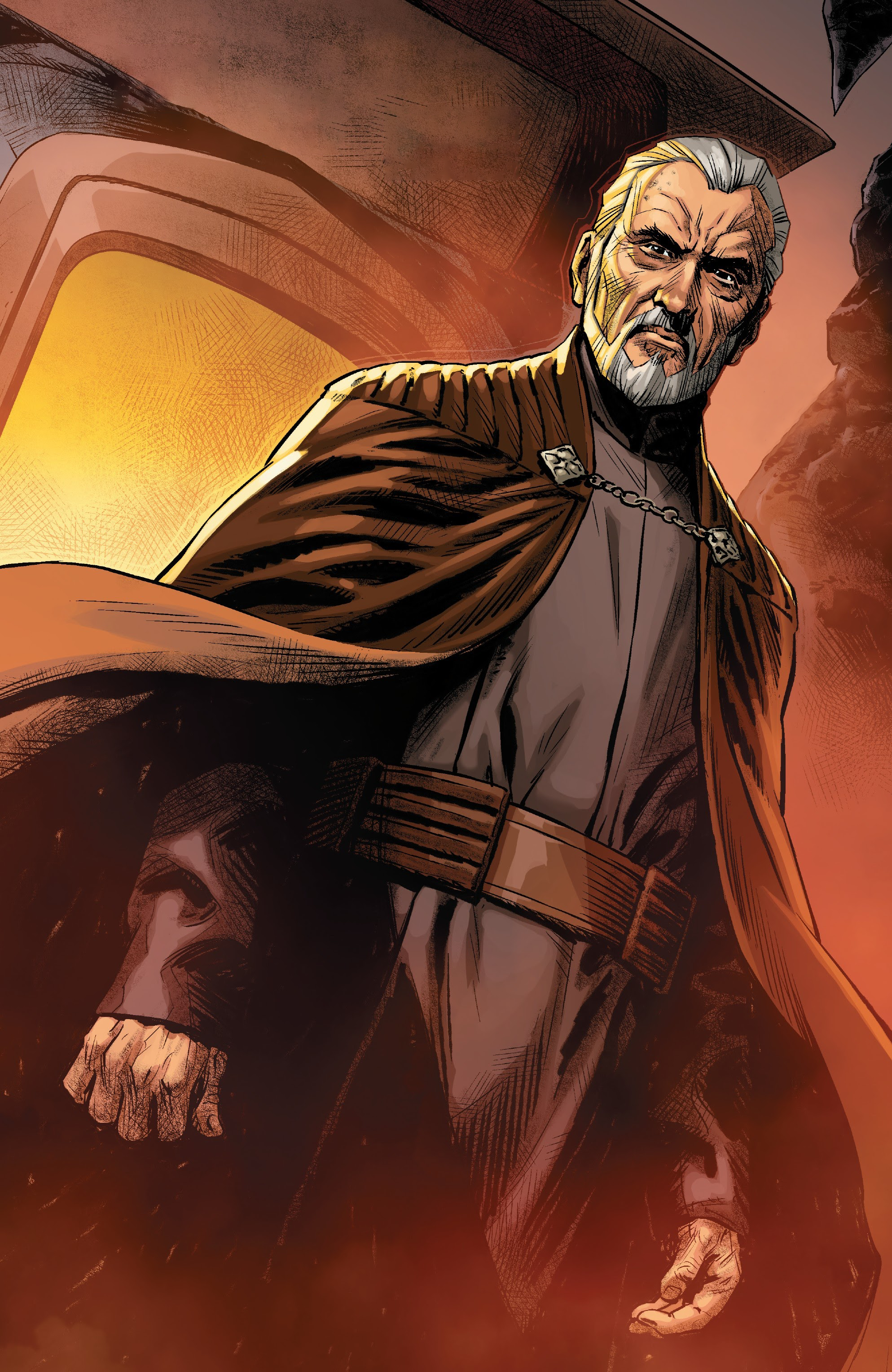
The Count of Serenno, Dooku, made minor moves onto the galactic scene as a political idealist before his true return to the spotlight during the Separatist Crisis.
Despite having already been brought into Sidious's fold,[23] Maul's apparent demise during the Battle of Naboo gave Dooku a chance to become the Sith Lord's true apprentice under the Rule of Two.[26] Taking control of the cloning project for the Sith by assuming Dyas's identity[24] and, at other times, presenting himself as an ally to the Jedi Master named "Tyranus,"[27] Dooku recruited[1] a Mandalorian[28] bounty hunter named Jango Fett to be the project's template. In truth, Tyranus was his Sith name,[1] with Prime Minister Lama Su and Doctor Nala Se of Kamino becoming a secret allies to the Sith.[29] However, those two Kaminoans believed the behavioral modification biochips they installed into the clones were created to respond to rogue Jedi,[27] but the control chips were in fact a vital part to the Sith plot; once the Jedi were forced to take control of the army for the coming war, the Sith could use the chips to force the clone troopers to murder their own leaders without choice.[30]
With the creation of the clone army under way,[31] Dooku followed his master's orders[19] to start bringing together populations and planets that were tired of the Republic, galactic businesses, and trade companies to form what would one day become the Confederacy of Independent Systems.[31] Before the formal beginning of the Separatists Crisis, Dooku allied with the Trade Federation, Commerce Guild, Techno Union, and other corporate titans[3]—promising them never ending financial growth[32] and other rewards, such as a seat on the Executive Separatist Council[3]—as well as criminal groups, including pirates and arms dealers. Proud to be the one who would bring Sidious's vision for the galaxy to fruition, Dooku at one point traveled to the planet Sullust in the Outer Rim with the public goal to reaching a business deal with SoroSuub Corporation on behalf of House Serenno, while in secret arriving to also make contact with the arms dealers of the Kaldana Syndicate on the orders of Sidious.[19]
While meeting with SoroSuub Representative Kap Klyp, Dooku also encountered Jedi Knight Jak'zin, who had been dispatched to Sullust by the Jedi High Council to investigate the Kaldana Syndicate. After Sidious ordered Dooku not to turn Jak'zin to their side due to the ideals of the Rule of Two, Dooku manipulated the Jedi Knight to bring him to the Kaldana Syndicate's base of operations. Revealing his Sith lightsaber after he and Jak'zin were surrounded, Dooku and the Jedi Knight fought off the criminals before the Sith Lord murdered the Jedi. Turning his attention to the last surviving member of the Kaldana Syndicate in the room, he used the Force to levitate a number of blasters towards the man while asking him to start a business arrangement with his master. The man agreed to Dooku's demands, supplying yet another group to the Sith's growing web of alliances. SoroSuub also offered Dooku a generous contract during his negotiations. As he left the planet, Dooku reflected on the growing chaos and corruption in the Republic and his growing alliance of third parties. He judged that the Sith would soon have full control over the galaxy.[19]
Rumblings in the Senate[]
- "I had a very strange conversation with Mon Mothma today, and an even stranger one with Mina Bonteri afterward. They both wanted to discuss my loyalty to the Republic, but I think there's something larger at play, and I have to know what it is."
- ―Padmé Amidala, to Sabé
Meanwhile, the Federation recovered from its defeat on Naboo and the ineffectual sanctions imposed on it by the Senate,[33] enabling it to retain its power over the Free Trade Zones,[3] albeit not as a monopoly over Outer Rim shipping.[5] Beyond investing in their resources, coalitions, and alliances after the Naboo and Gungans, instead of relying on the Republic, worked together to throw off the Federation's occupation, many star systems had effectively seceded in spirit, with some planets making their own deals with the Federation instead of relying on the Republic the company had outmaneuvered time and time again. Many of the planets that had seceded in spirit were in fact being manipulated by the Federation and other major corporations, which continued to employ its senators on Coruscant to maintain the secrecy of their actions[3] and to lobby for corporate interests within the government. The Senate itself also became an arena of the growing Separatist movement because there was a growing sect of senators who believed loyalty to one's homeworld over the Republic was not an issue.[13]
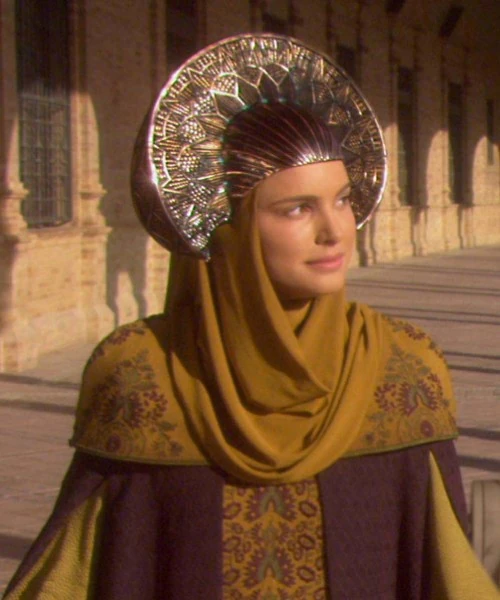
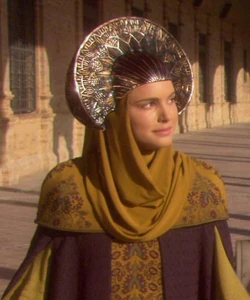
Padmé Amidala (pictured) encountered a growing anti-Republic sentiment during her first year in the Senate.
Padmé Amidala—who served as Naboo's queen during the Federation's invasion and became its senator at the request of Queen Réillata—encountered what she deemed to be "strange undercurrents" amongst some of her fellow senators during her first months as a senator[13] in 28 BBY.[34] Amidala's encounters with the growing separatist sentiment began during the first days of her term when she attended an official gathering, during which Palpatine introduced her to Senator Mina Bonteri of Onderon.[13] A future Separatist,[12] Bonteri had began to take orders from a mysterious figure, whom she addressed as her "lord," via holograms sent over highly encrypted communication lines. As such, her trustworthiness was doubted by some senators, although she made sure to never directly oppose Palpatine in political matters. At the party, Bonteri claimed to Amidala that no one had any faith in the Republic, which Amidala quickly rebutted by stating she did, to which Bonteri responded by studying Amidala for a moment and stating she would do well after she secured allies. Some time the gathering—which Bonteri warned was the type of function where real work in the Senate was done—and joining Senator Bail Prestor Organa's construction material committee, Amidala was introduced to Senator Mon Mothma of Chandrila, who spoke about how it was not an easy task to put loyalty to one's homeworld aside for what she deemed to be a "greater purpose," serving the Republic itself.[13]
Realizing that Organa and Mothma wanted to see if her loyalty was to Naboo alone or the Republic, Amidala then found herself meeting with Bonteri in her office, where Bonteri told Amidala about the growing number of senators who wanted to first and foremost place their loyalty to their homeworld. When Amidala countered that a Republic senator was expected to maintain a balance between the whole galaxy and their homeworld, Bonteri asked her if someone could truly be objective about the entire galaxy, but she did not seem disappointed in Amidala when the younger senator responded they should at least try. Amidala found it odd she had two conversations about her loyalty to the Republic, suggesting to her former handmaiden Sabé that there was a larger game at play. The following week, Amidala and her retinue attended a gala held by Mothma, who invited the new senator as a cover for the press to focus on so she could discuss her suspicions on Bonteri's loyalties away from prying eyes. Switching out with Sabé, Amidala secretly listened to the meeting, during which Organa noted Bonteri was clearly trying to bring Amidala into her fold. Deciding to outright ask Amidala to join them outright after Senator Onaconda Farr stated Amidala and, if it followed her lead, Naboo were loyal, the secret meeting broke up, forcing Amidala to rush back to Sabé.[13]
Organa ended up seeing the disguised Amidala before she switched back with Sabé, leading to a discussion where Organa noted his belief that loyalty to the Republic and democracy were paramount. Although she too was curious about her actions, Amidala swore that she would not spy on Bonteri nor give up the friendship she had forged with her, which Organa agreed was fine. During a recess away from the Senate sometime later, Amidala, while back on Naboo, told Réillata about the undercurrents she had seen, noting her fear that there were senators who doubted the Republic's effectiveness and her hope that she would not be labeled as one of them. As she explained to the Queen, she was more than willing to force the Republic to act, as she had by calling for a Vote of No Confidence in Valorum years prior, but she clarified that she would do so for any world, not just for Naboo. Upon the beginning of the new Senate session, a series of groundquakes rocked the planet Bromlarch, with Bonteri emerging as the leader of the Senate survey team that would assess the planet's damage.[13]
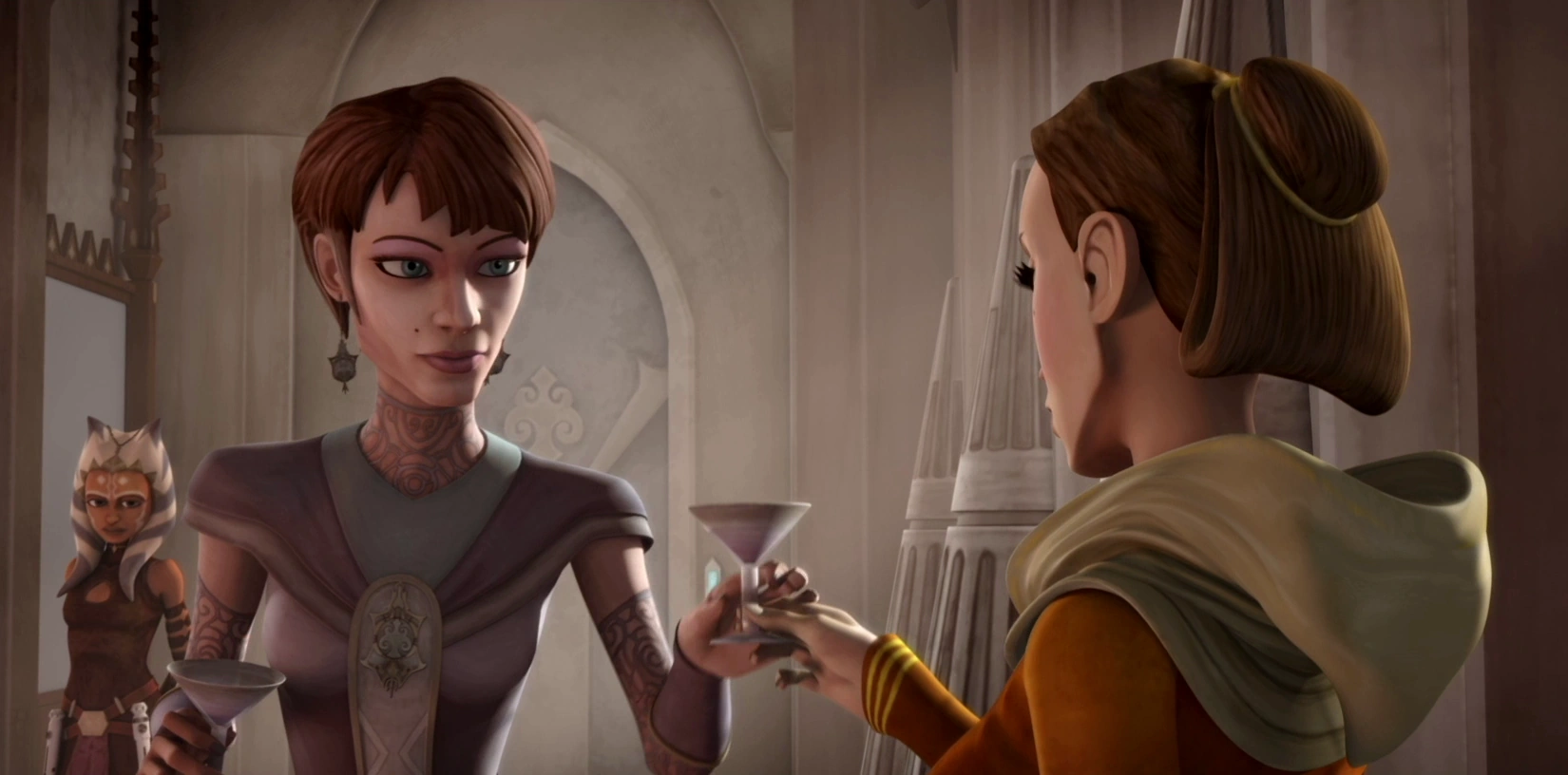

Senators Mina Bonteri (left) and Padmé Amidala (right) were eager to help the people of Bromlarch, but the former did not help the latter create the Mid Rim Cooperation Motion when their initial bill in the Senate failed.
When Amidala thanked her friend for allowing her to join the team, Bonteri noted she would try not to take advantage of how much causes like it meant to the younger senator, which Amidala took to be an odd statement. On the day Bonteri was to address the Senate with their findings, Amidala went to her office, where she overheard her fellow senator speaking to her mysterious contact in a serious manner. The conversation gave Amidala a feeling of dread and ended when the contact ordered that she do what she could, warning her that he would step in if she failed. When Bonteri gave her address to the Senate and put out the bill to help Bromlarch, Federation senator Lott Dod objected to its price, alleging that it was an internal matter that the planet could receive Federation help with privately. Thanks to Dod's objections, the bill failed in the Senate. While Bonteri was visibly upset by the outcome, she did not help Amidala and Senator Rush Clovis create the Mid Rim Cooperation Motion, which they designed to help Bromlarch in a manner that also benefited numerous other Mid Rim worlds, therefore ensuring it gathered the needed votes. Only after the motion was written did Amidala realize it was odd that Bonteri did not help them.[13]
Although Senator Caelor Gaans of Bromlarch considered taking the Federation's offer, the Mid Rim Cooperation Motion passed in the Senate. After it was passed, Bonteri had a conversation with her contact that she rushed to finish when Amidala entered her office, promising the man she would update him about something in time. Amidala was left with an odd feeling of cold from the hologram of the man and also believed her relationship with Bonteri was left in ruins, as the Senator commended her on with patience with the Republic but quickly ensured she left her office.[13] Nevertheless, they managed to rescue their friendship for the years to come, but they were never able to agree about the Separatists after the CIS was formed and Bonteri joined it.[12] Amidala also spoke with Mothma, who noted her concern that fear was one of the only things that could unify the Senate, but whatever caused that fear would be a ruinous event. A short time later, Nute Gunray's final trial in the Republic's Supreme Court ended in victory, allowing him to remain leader of the Federation. Rumors began to emerge that he put a bounty on Amidala.[13] After his defeat on Naboo, he wanted revenge against Amidala and to see the Republic fall,[35] which had led to the Federation's alliance with Dooku.[1]
The crisis[]
Beginning[]
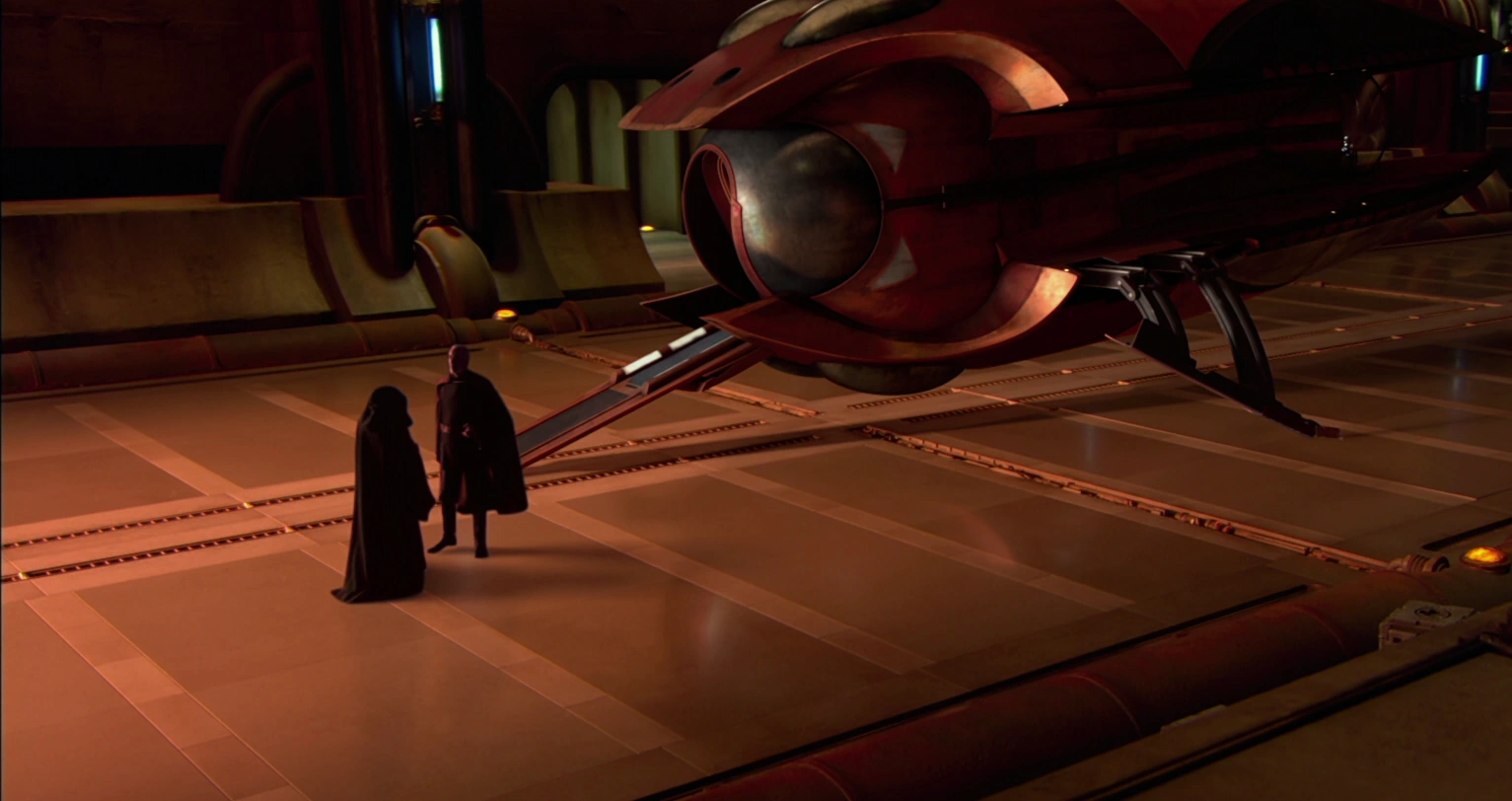
Exploiting the anger much of the galaxy held towards the Republic, the Sith began the Separatist Crisis as a step towards gaining power.
When Dooku took his eight-year leave of absence from the Jedi Order, many galactic citizens supposed he merely wished to form an offshoot of the Jedi, while rumors circulated of him fomenting political turmoil on a host of worlds.[5] The Separatist Crisis truly began, however,[3] when Dooku made a surprising return to the limelight with a denouncement of the Republic, which he preformed by hijacking a HoloNet relay station in the Raxus system. Many believed that a galactic war was imminent. Moving in secrecy—some believed one step ahead of Republic assassins—Dooku became the focus of galactic attention. Backing coups on Ryloth and meddling in the affairs of a variety of worlds including Kashyyyk, Sullust, and Onderon, Dooku further alienated distant worlds from the Republic political process and spurned all attempts to negotiate from Supreme Chancellor Palpatine.[5]
Following through on his words, Dooku created the Confederacy of Independent Systems and proclaimed it would be, unlike the Republic, a fair government.[3] Dooku's words of inflammatory rhetoric found receptive audiences among young intellectuals in Mid and Inner Rim universities, with the so-called jumpover sectors of the Republic lacking the political pull of the central systems and the ability to effectively profit from their Outer Rim neighbors. Charismatic and exuding confidence, Dooku's message rallied thousands of hearts and souls, relaying his decades of experience within the annals of the Republic and publicizing its hypocrisies, corruption and ineffectiveness. Inspiring action, Dooku's tone expounded a message of rebellion that mesmerized young psyches and spurred them into political activism.[6]
Worlds leave the Republic[]
- "I am committed to the idea of a galaxy ruled by an enlightened leader, with laws that apply universally—not one set for the Core Worlds, another for the Outer Rim worlds."
"An autocracy, guided by the count of Serenno."
"I am ambitious, but not to that degree." - ―Count Dooku and Wilhuff Tarkin, during their final dinner together before the onset of the Clone Wars
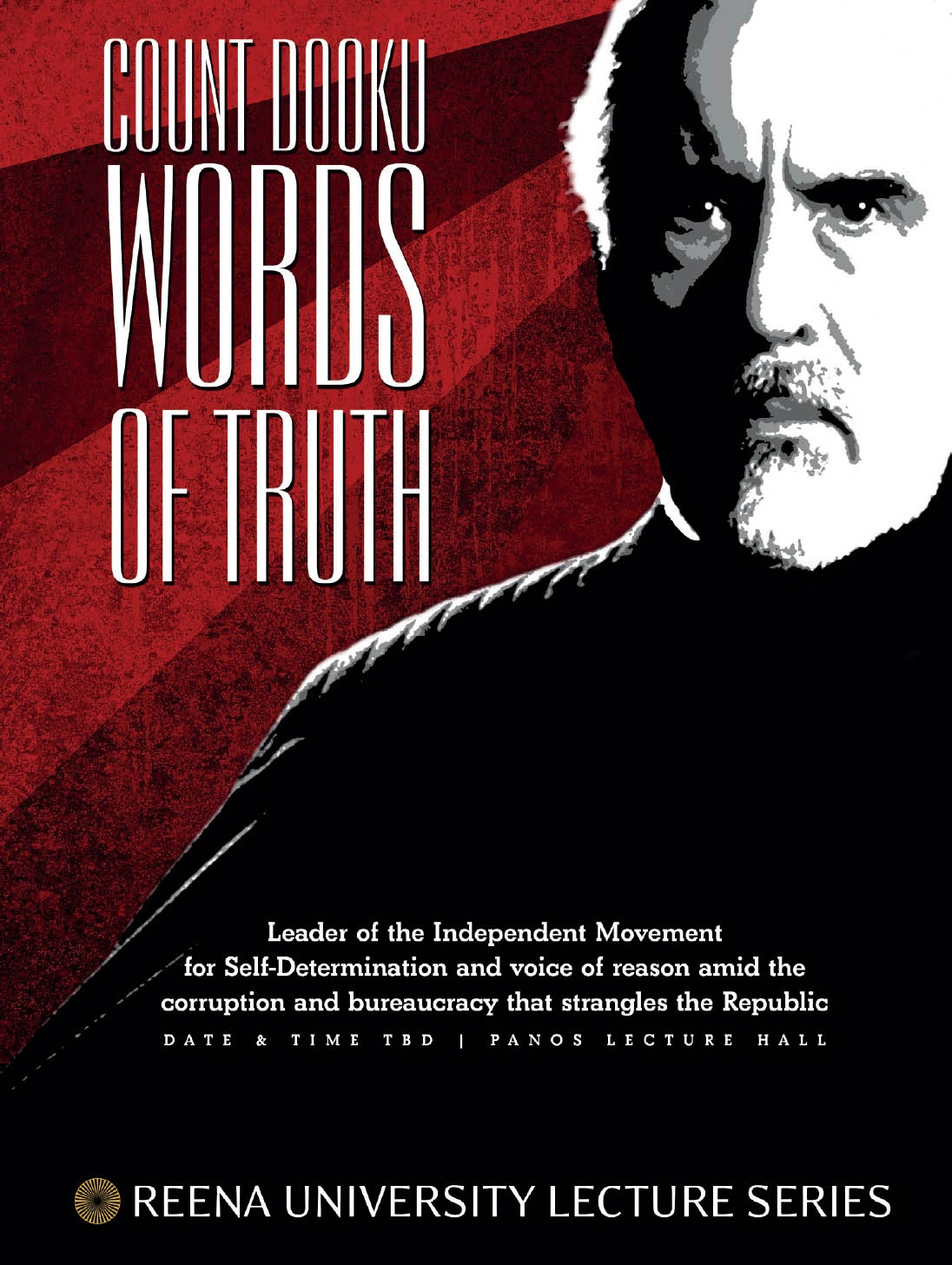
A pamphlet for Reena University highlighting Dooku's Independent Movement for Self-Determination, by Ansibella Dellu.
The Independent Movement for Self-Determination that Dooku had previously led gave him the legitimacy needed to lead the Separatists.[22] The mixing of different species could cause issues during the tense period that was the crisis. This was once seen on the Republic capital world of Coruscant in Port Quarter's eastern spaceport through the Weequay-Houk brawl.[36] In fact, as the Separatist crisis grew more and more heated, Dooku's appearances grew rarer and were announced with much shorter notice, with his message often inciting violence on the most polarized worlds[6]—such as on Ando and Ansion.[source?] Palpatine, meanwhile, was faced with pushes from the Senate to go to war. In his role as Supreme Chancellor, he did his best to hold back that tide,[11] while as a Sith Lord he waited for the proper time for conflict to begin.[1]
Rallying together systems into the newly formed Confederacy of Independent Systems, Dooku sought to create a southern Separatist sphere of influence by coercing Yag'Dhul and Sluis Van to his side, along with the prosperous Outer Rim world of Eriadu. With its location at the confluence of the Hydian Way and Rimma Trade Route, Dooku needed Eriadu's allegiance to control the Greater Seswenna and effectively collapse the core back onto itself, undoing millennia of galactic exploration, conquest and colonization. Despite appearing in his regal elegance and attending dinners with Eriadu's then Governor, Wilhuff Tarkin, the attempt to claim Eriadu's loyalty would fail, as Tarkin refused and claimed an ineffective yet unified galaxy was better than a fractured one.[5]
Despite this, thousands of dissatisfied star systems ultimately seceded from the Republic and fully embraced the Confederacy's fiery message of resistance. The agrarian world of Ukio found itself questioning how its value as the breadbasket of the Core Worlds was reciprocated, and after citing a litany of neglect, senatorial representatives of the Abrion sector tendered their articles of secession along with other worlds in the galaxy's hinterlands. The idea that the Republic was distant, dispassionate, and unworthy of membership ultimately marshaled disgruntled systems into a new galactic government.[6]
The Clone Wars begin[]
- "This is a crisis. The Senate must vote to give the chancellor emergency powers. He can then approve the creation of an army without a vote."
- ―Mas Amedda
While the Separatist movement gained power under the secret guidance of the Sith, the Galactic Senate debated the Military Creation Act to determine the merits of raising an army. It eventually decided in favor of the notion, especially after Palpatine was granted emergency powers at the suggestion of the Gungan Junior Representative Jar Jar Binks. His first act was to adopt a secret clone trooper Kamino as the newly formed Grand Army of the Republic.[1] The galaxy at large did not know of its history under Jedi Master Sifo-Dyas and then the Sith.[37] In fact, the knowledge of the clone army was shrouded in mystery for years until Jedi Knight Obi-Wan Kenobi discovered its presence after a failed assassination attempt, ordered by Dooku and Gunray, against Senator Amidala, who opposed the military buildup.[1]
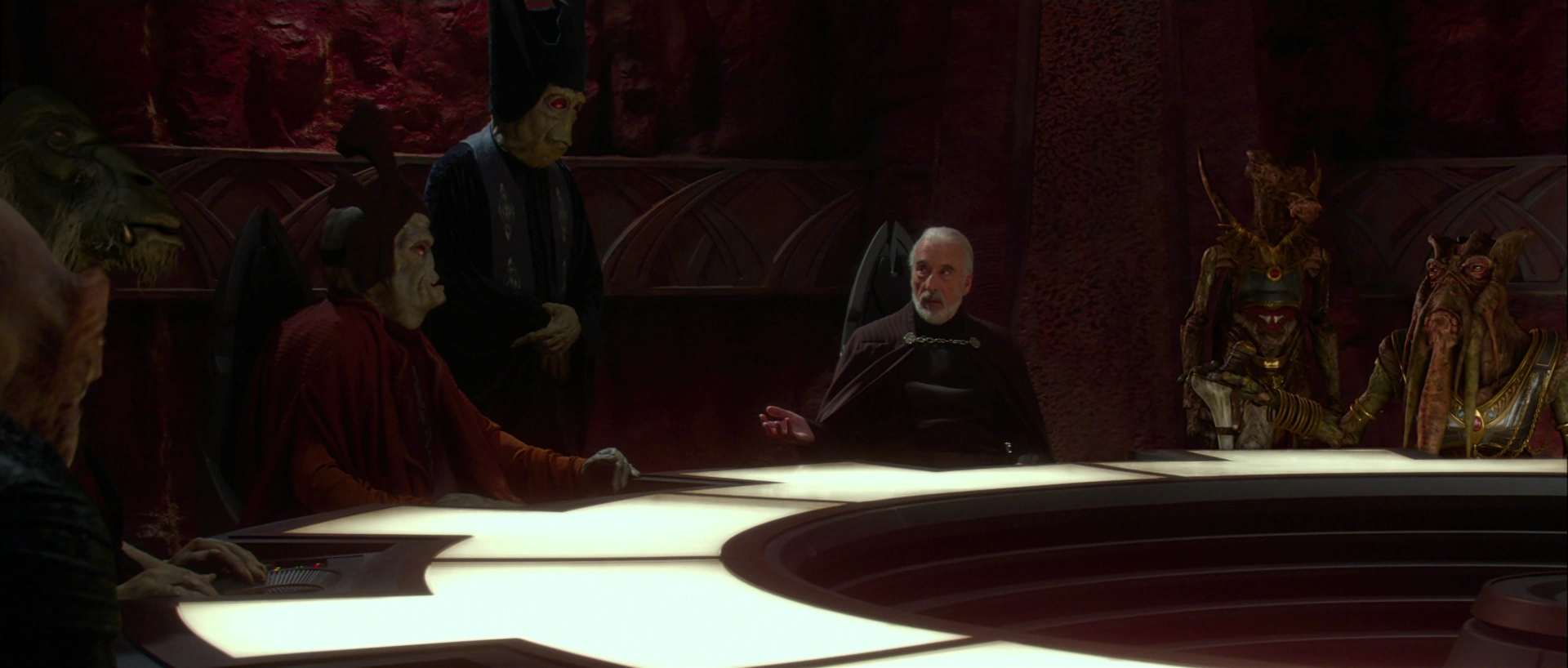
The Confederate leadership on Geonosis
Investigating the barren world of Geonosis, Kenobi discovered a secret meeting of Confederate leaders under the guidance of Count Dooku. Having lured members of a variety of commerce and corporate guilds into his new Confederacy, including the Techno Union, Corporate Alliance, and Trade Federation, Dooku planned on using a vast army of newly formed battle droids of the Separatist Droid Army to force the Republic to negotiate a settlement. Coming to the aid of Kenobi after his capture, the newly formed Grand Army of the Republic engaged the Confederate forces on the planet—not, however, before Dooku and other members of the Separatist leadership escaped. With full-blown war now embroiling the galaxy, the deadly Clone Wars would devastate thousands of systems over the next three standard years.[1]
Aftermath[]
Upon the rise of the autocratic Galactic Empire, supplanting the democratic Galactic Republic that preceded it, the newly formed Imperial Security Bureau conducted vast loyalty purges, along with punishing worlds involved in the Separatist rebellion, with one of the most criticized dubbed the Antar Atrocity.[5] Pamphlets, books, and Separatist propaganda were subsequently burned and declared illegal, while former Separatist warships were dismantled, and droids found on the black market, often ending up in the hands of nationalist rebels or criminal organizations.[38]
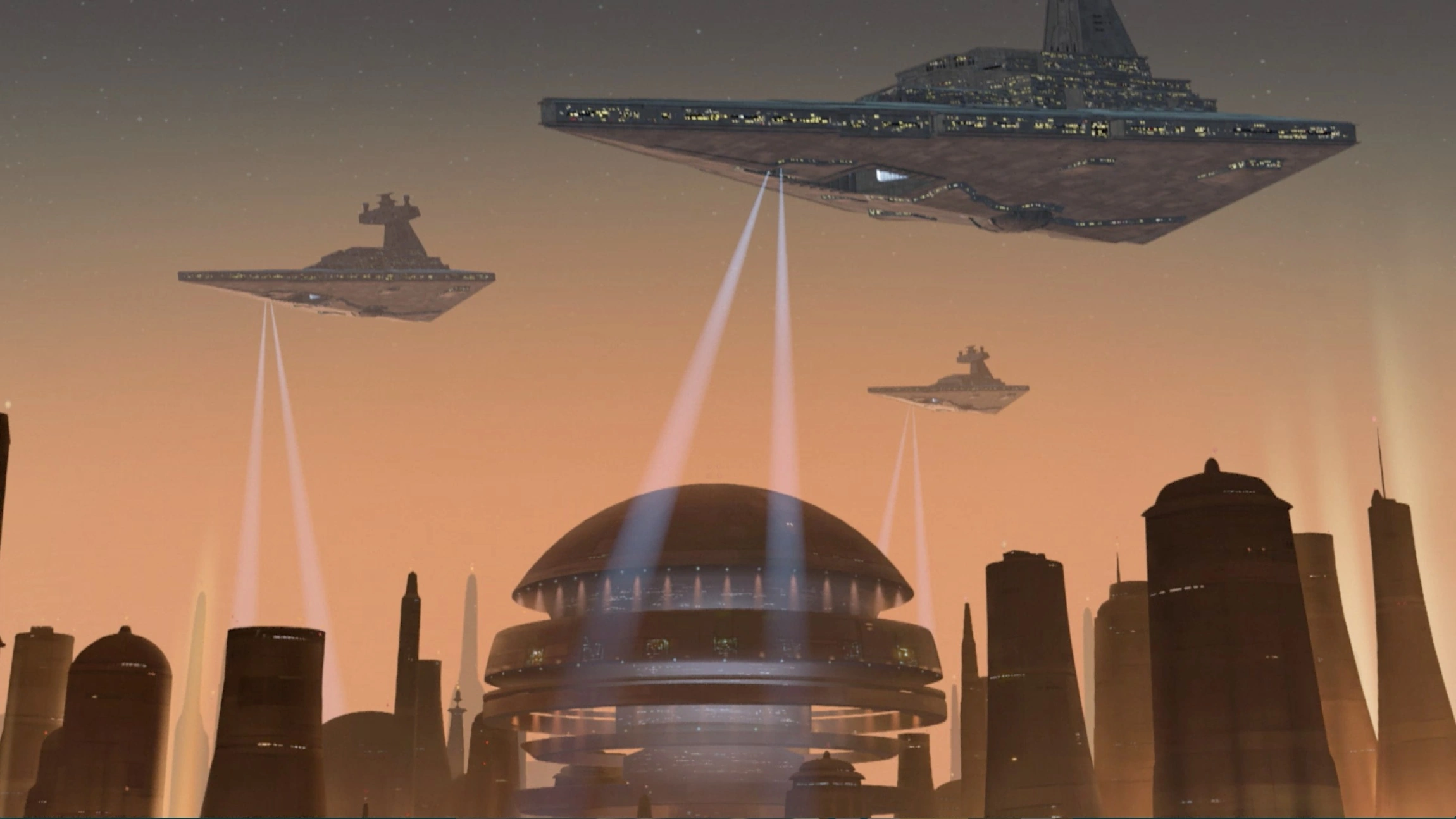
Imperial warships in the skies of worlds came to mean order and progress, a stark contrast to the "mayhem" of the Old Republic.
While initial Separatist holdouts would occupy Imperial efforts in its early years, the Secessionist Movement would eventually be taught as an example of the corruption and ineffectiveness of the Republic, a corruption that the new Empire claimed to have solved. Scarred by memories of the war, many systems would cheer at the sight of new Imperial-class Star Destroyers and symbols of Imperial might. Additionally, in an effort to increase the loyalties of worlds embroiled in the Separatist Crisis, the Imperial Academy reserved slots to those from former Separatist worlds of the Inner Rim in an effort to increase their loyalty.[38][5]
With the fall of the Galactic Empire approximately three decades after the Secessionist Movement began, the New Republic rose to power. However, many star systems refused to join the New Republic fearing a repeat of the Empire, resulting in the New Republic being smaller than both the Republic that preceded it and the Galactic Empire.[6] Despite this, many systems remained on friendly terms with the new establishment, and the decision to host the New Republic's capital on a rotating basis based on voting among member worlds helped to alleviate the fears many former systems embroiled in the Secessionist Movement, encouraging them to rejoin the Republic long after the chaos and violence of the Secessionist Movement, Clone Wars, and the Galactic Civil War.[39]
Appearances[]


Non-canon appearances[]
Sources[]


Notes and references[]


